Data Analysis on Speeding Behavior: The Impact of Auditory Warnings and Demographic Factors
Nov 12, 2024· ·
0 min read
·
0 min read
Christian Bank Lauridsen
Equal contribution
,Mads Greve Andersen
Equal contribution
,Max-Emil Smith Thorius
Equal contribution
Fabricio Batista Narcizo
Abstract
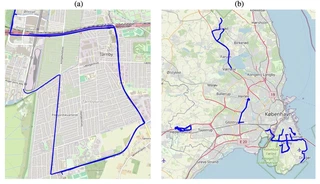
Speeding significantly contributes to traffic accidents, posing ongoing risks despite advancements in automotive safety technologies. This study investigates how auditory alerts influence speeding behavior across different demographic groups, focusing on drivers’ age and experience levels. Using a mobile application to collect real-time driving data, we conducted a field study in Copenhagen/Denmark that included various driving environments and controlled auditory warnings for speed limit violations. Our results revealed that auditory alerts were unexpectedly associated with an increased frequency and duration of speeding incidents. The impact of these alerts varied by experience level – intermediate drivers showed reduced speeding duration in response to alerts, whereas novice and highly experienced drivers tended to speed for more extended periods after receiving alerts. These findings underscore the potential benefits of adaptive, experience-sensitive alert systems tailored to driver demographics, suggesting that personalized alerts may enhance safety more effectively than standardized approaches.
Type
Speed Behavior
Auditory Alerts
Driver Demographics
Driver Experience
Road Safety
Adaptive Alert Systems
Traffic Accidents
Behavioral Response

Authors
Fabricio Batista Narcizo
(he/him)
Senior AI Research Scientist
Fabricio Batista Narcizo is a Senior AI Research Scientist in the Video Technology department at GN Hearing A/S (Jabra) and a Part-Time Lecturer and Course Manager at the IT University of Copenhagen (ITU). He received his Ph.D. degree in Computer Science from the ITU in 2017, his M.Sc. degree in Electronic & Computer Engineering from the Aeronautics Institute of Technology (ITA) in 2008, and his B.Sc. degree in Computer Science from the University of Western Santa Catarina (UNOESC) in 2005. His research interests lie in computer vision, image analysis, artificial intelligence, data science, data mining, machine learning, edge AI, and human-computer interaction, with a particular interest in eye-tracking.